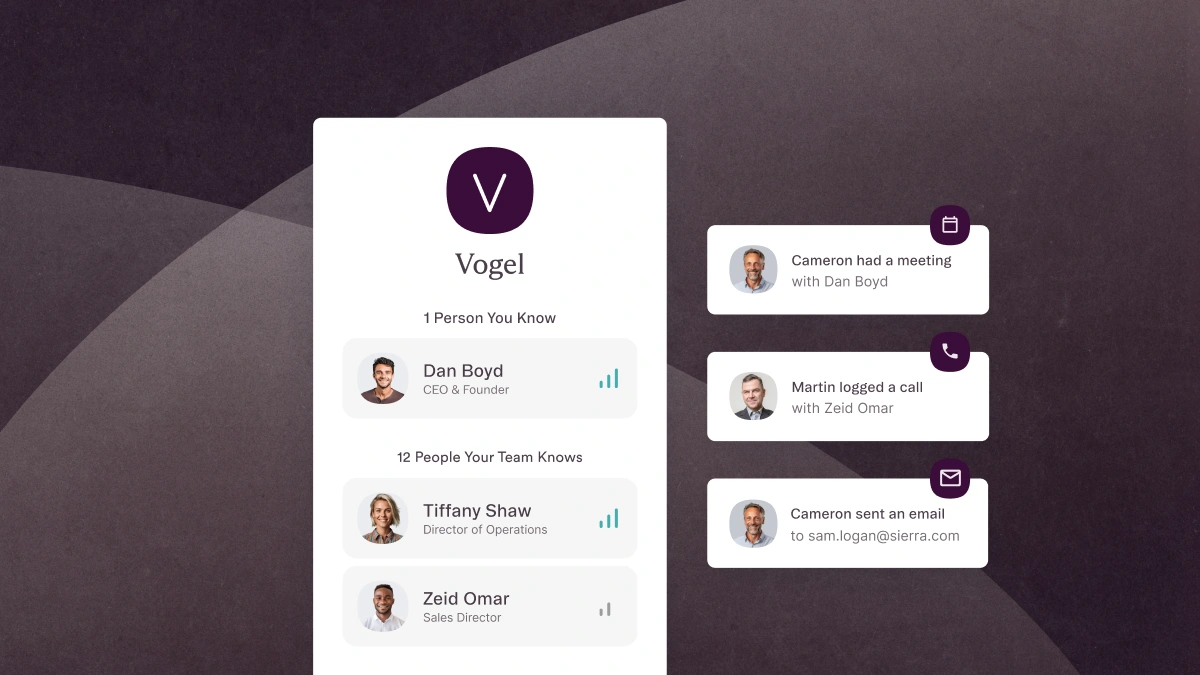
7 Modern Workflows to Win Deals Faster in 2026
Most private capital firms sit on networks worth millions in deal flow. The winners have built systems to actually tap into them.
This guide features real workflows from firms like BlackRock ($13T AUM), Bessemer Venture Partners, SpeedInvest (€1.2B), and Notable Capital ($5B) that win proprietary deals in days, reclaim hundreds of hours, and prevent critical relationships from going cold.
Real implementations with specific architecture details. Measurable results from firms actually using these systems. What worked, what didn't, and why it matters for your firm.
What you'll learn:
- How Speedinvest manages 357 LP relationships across six offices (zero relationships go cold)
- How Gradient wins deals in a week while competitors are still finding intros
- How Notable scaled to 500+ BD intros per year with a two-person team
- How BlackRock 5× their research capacity without adding headcount


"Implementation was really easy. We were able to start using the platform straight away."

"Having a well-defined, clean, golden source data set is more important in the age of AI. That's a lot of the benefit we're seeing from Affinity."


"It's night and day. We are way more organized when it comes to relationships. We've won a good amount of deals we wouldn't have won if we hadn't changed over to Affinity."
"Venture capital is a craft, and Affinity is one of the tools helping the investment team build this craft better."

7 Modern Workflows to Win Deals Faster in 2026


Most private capital firms sit on networks worth millions in deal flow. The winners have built systems to actually tap into them.
This guide features real workflows from firms like BlackRock ($13T AUM), Bessemer Venture Partners, SpeedInvest (€1.2B), and Notable Capital ($5B). You'll see how they win proprietary deals in days, reclaim hundreds of hours, and prevent critical relationships from going cold.
What's inside:
- 7 modern workflows solving the biggest challenges in private capital
- Measurable results: time saved, deals won, relationships preserved
- Real implementations with specific architecture details
- What worked, what didn't, and why it matters
Workflow 1: The LP coverage system
Investment firms lose deals because their LP relationships go cold. By the time they realize it, the opportunities are gone.
The problem
Lukas Huber manages relationships at Speedinvest, a €1.2B European VC spanning six offices. Each team member maintains 20-30 critical LP relationships—the gatekeepers to early deal flow.
"The touchpoints were fragmented and the manual work felt more like a hassle than a benefit," Lukas said. "We missed some opportunities and it was hard to have clear accountability."
The core issue: relationship decay happens silently. By the time you realize you haven't spoken to a key LP in three months, you've already lost their current deal flow.
What SpeedInvest built
Three components that run automatically:
1. Visual relationship alerts
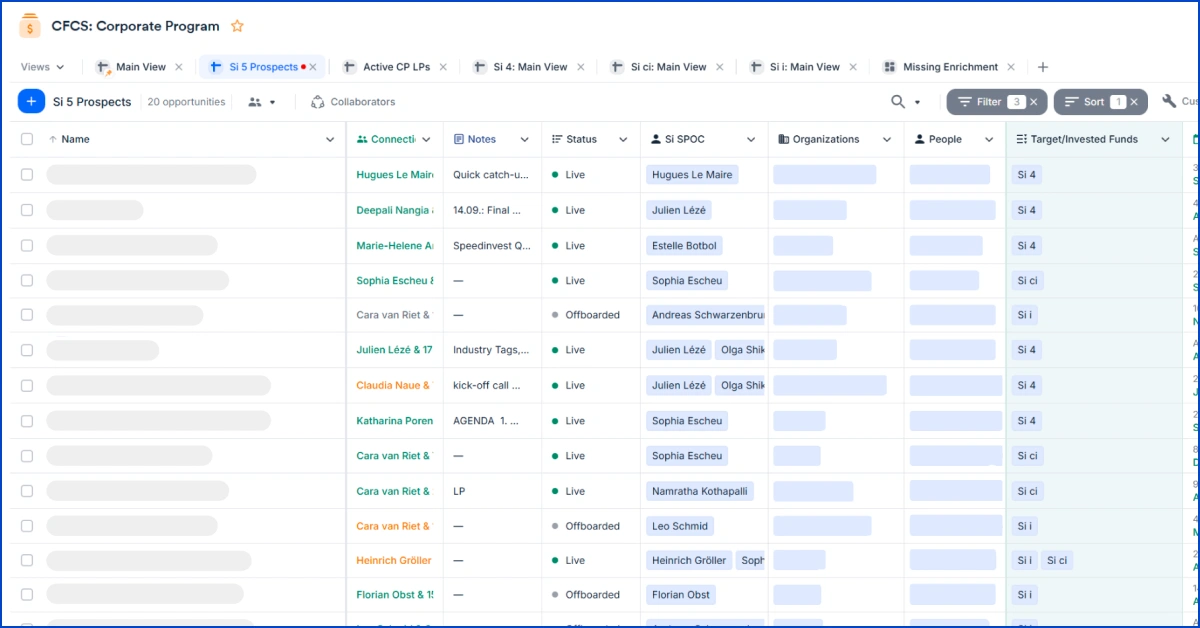
Their LP list shows relationship strength in real time. Orange text flags relationships weakening (no contact in 60+ days), which converts an invisible problem into a visible trigger requiring immediate action. Partner sees alert, sends meeting invite. Takes 30 seconds.
2. Automatic reminder triggers
Set once: "Notify me if any high-priority relationship exceeds 60 days since last contact." The system monitors continuously and alerts arrive before relationships go cold, eliminating the cognitive load of manually tracking dozens of relationships.
3. Coverage dashboards
Leadership sees at a glance: coverage by geography, top bankers by deal quality, which relationships need attention across all six offices. This prevents the "blind spot problem" where everyone assumes someone else is managing a relationship.
The results
Zero relationships go cold unintentionally. Zero manual hours spent tracking. Complete visibility across offices. Seconds to identify warm paths to target companies.
"At firms where bankers play a critical role in early access to high-quality deals, Affinity helps them capture, prioritize, and actively manage these relationships at scale," Lukas said. "I never miss out on the right deal just because of a blind spot."
Why it works
The system succeeds because all three layers depend on automatic email and calendar capture. Every interaction gets logged without manual entry, which means adoption becomes inevitable rather than forced. Relationship scores update based on actual communication patterns, not assumptions or manual status updates.
Workflow 2: The 30-second proprietary deal check
The best deals never get banked. By the time a founder has a deck and starts a formal process, they often have four or five term sheets already. The question is: how do you get into those early conversations?
The problem
Andrew Brackin, Partner at Gradient Ventures, described today's reality: "The market is more competitive than ever. Companies are raising rounds faster—you see founders leaving companies and raising a seed round as they leave. They might not have a deck yet but have four or five term sheets. You can't wait for them to raise. You have to be nimble and scrappy."
The challenge isn't lacking connections. Most firms have relationships with the founders they want to back. The problem is surfacing those relationships fast enough to act on them.
What Gradient built
Andrew shared a real investment that started with relationship intelligence: "I was running late to a restaurant and called ahead. An AI assistant answered—when I arrived, the host said 'Hi Andrew, we got your message about running late.' I was blown away."
The workflow he used:
1. Immediate relationship search
Hear about target company → Search in Affinity (takes 5 seconds) → See who at the firm knows the founder and relationship strength based on actual emails and meetings, not LinkedIn assumptions.

2. Strength-based routing
System shows Shelly has the strongest relationship with founder Nikki, measured by communication frequency and recency. This eliminates guessing about who should make the introduction.
3. Warm introduction
Request intro from Shelly → Conversation starts ahead of banking process.
In Andrew's case: "The moment that company was ready to raise, we'd already spent months chatting. We did the round in a week. Other firms wanted to do it, but we moved super quickly."
The results
Days to first conversation (not weeks). Significantly higher win rate on proprietary deals. Junior team networks systematically leveraged. Speed advantage when founders have multiple competing term sheets.
Kyle Duffy, Operating Partner at Gradient, explained the advantage: "Unlike platforms that use assumptions built off LinkedIn, Affinity's relationship intelligence is calculated directly from activity capture—email correspondence and meeting history."
Why it works
Your firm's connections already exist in email inboxes and calendar histories. This system surfaces them in 30 seconds by analyzing actual communication patterns, like who emails whom, who meets with whom, how recently, and how frequently. LinkedIn shows who you're connected to. This approach shows who you actually have relationships with.
Workflow 3: AI meeting prep and follow-up
The cognitive load of relationship management doesn't scale. When you're meeting two to three new executives per week and managing 200 portfolio companies, remembering which connections might be relevant becomes impossible without systems.

The problem
Bailey Dickey leads BD at Notable Capital ($5B AUM, 200 portfolio companies). "We're meeting two to three new executives per week. The cognitive load of trying to remember which of our 200 portfolio companies might be interesting, what content the team has put out—we created a workflow that allows us to show up better in every conversation and reduce that cognitive load."
Manual process: 30-45 minutes prep + 20-30 minutes follow-up = 50-80 minutes per meeting. At scale: five to six hours weekly on administrative work instead of relationship building.
What Notable built
They integrated n8n (automation), Claude (AI), Notion (notes), and Affinity (CRM):
1. Pre-meeting automation (5 minutes)
When meeting scheduled in Affinity → Webhook triggers → Claude researches executive and company → Matches relevant portfolio companies from Notable's 200 → Surfaces relevant content → Creates three Notion docs with full prep. This eliminates manual research and ensures no portfolio connection gets overlooked.
2. Post-meeting automation (5 minutes)
When status updated to "Follow-up" → Claude parses meeting transcript → Generates personalized email referencing specific conversation points → Includes promised portfolio intros → Draft ready for review. This prevents the common failure mode where promised introductions never happen.

3. Shared intelligence layer
Dave Grenitz, Head of IT: "We use Claude as a shared brain across the firm. We feed it data from all systems. It contextualizes and understands what we're asking for, where to get it. It really supercharges our lean team."
The results
Bailey: "Within 24 hours of every meeting, we're sending a follow-up. It's consistently personalized. We've had executives tell us, 'This is the most relevant portfolio intro I've gotten from any VC—you clearly understood our business.'"
40+ hours per month saved for a two-person BD team. 2× meeting capacity (can handle five to six meetings per week vs. two to three). 100% promise tracking (nothing mentioned in a call gets forgotten). Stronger portfolio support brand.
Why it works
AI handles the prep work humans used to do—research, matching relevant connections, drafting initial language. Humans add judgment and personalization. The result is scale without additional headcount, and more importantly, without the quality degradation that typically comes with scaling.
Workflow 4: Breaking the CRM adoption death spiral
CRM adoption in private equity follows a predictable pattern: strong for the first month, then drops off a cliff. The reason is always the same: manual data entry becomes the bottleneck nobody has time for.
The problem
Udai Chopra, Principal at Future of Work Partners (spun out from Two Sigma 18 months ago), describes the pattern: "When we've set up a CRM in the past, adoption's good for the first month or two, and then it just drops off a cliff because no one has time."
The specific pain: "We've got 25 people across three offices, but wires are getting crossed. SIMs from bankers are coming to the wrong team members. I need something to remind me when to catch up with bankers. In PE, if I haven't had the right conversation at the right time, there's a big risk of missing out on deal opportunities. The consequences can be much bigger than VC."
What changed at Future of Work
Udai identified the breakthrough: "Meeting investment professionals where they are—that's always been the biggest challenge."
The solution: Automatic Outlook integration. "We use Affinity’s Outlook integration, so it's always on in the background enriching our data set. Which means we're using it frequently."
How it works:
1. Automatic activity capture
Email and calendar sync captures every banker interaction without manual logging, which removes the primary reason CRM adoption fails. Nobody wants to spend time on data entry.

2. Visual decay indicators
Orange text alerts show weakening relationships at a glance, converting relationship management from a reporting exercise into a tool that prevents embarrassing situations.
3. Cross-platform access
The team can reach out directly from Affinity, or use the Pathfinder extension in LinkedIn, email, mobile—wherever they actually work. This eliminates tool-switching friction that kills adoption.
The results
Udai identified three reasons this succeeded when others failed: "Vertically focused solution for the investment world. Self-service aspect—I'm impatient and hate waiting for screens to be customized. Flexible data model with bespoke views for deals, networks, relationships, LPs."
Most importantly: "For me, it's shifting the mindset from CRM as an admin reporting tool to thinking about it as a strategic enabler, particularly in a world of AI."
Sustained adoption beyond 90-day failure point. Zero SIMs coming to wrong team members. Full visibility into banker relationships across three offices. Nothing slips through the cracks.
Why it works
The system solves a daily pain point (finding the right person for an intro, preventing relationships from going cold) rather than just creating reports for leadership. Because it works where the team already lives—in email, LinkedIn, and mobile—adoption becomes inevitable rather than aspirational.
Workflow 5: AI categorizes deal flow automatically
Investment firms receive hundreds of inbound companies annually. Each one needs research and categorization: which vertical, which stage, which investor should see it. At five to ten minutes per company, this becomes weeks of manual work, and the bottleneck determines how fast you can move on opportunities.
The problem
Clifford Cohn, Principal at World Innovation Lab (US-Japan VC fund), described the pre-automation reality: "Before 2023, it was manual processes with pulling Pitchbook data from frontend reports, manually updating things in Salesforce. It wasn't very automated or sophisticated."
The bottleneck: Each company takes five to ten minutes to research and categorize into proper verticals. Hundreds of companies annually equals weeks of work. Plus, inconsistent categorization, wrong investor assignments, and out-of-mandate companies cluttering the pipeline.
What WiL built
They hired a data scientist in 2023 and built AI-powered categorization using Claude and OpenAI:
1. Automatic enrichment trigger
New company added to Affinity → System auto-enriches with Pitchbook, Harmonic, SimilarWeb data → Webhook triggers AI categorization. This creates a complete data foundation before analysis begins.
2. Multi-source AI analysis
Claude analyzes three to four company descriptions → Returns classification across WiL's eight investment verticals using a scoring system. Clifford: "In practice you get back a Python dictionary—eight key-value pairs where 0 is no and 1 is yes."

3. Intelligent routing
If in-mandate: Assign to sector investor + Slack notification. If out-of-scope: Flag and archive. This ensures only relevant companies enter an active pipeline, which maintains data quality and focus.
The results
"We moved to Affinity and it's been great. It's provided us the flexibility to build automations and workflows in a custom manner that really fits our unique needs. So we have no latency and everything is in one place. This is important for our team—one source of truth and one place we can always go to run our meetings."
250+ hours per year reclaimed from categorization. 30 seconds per company (down from five to ten minutes). 95%+ accuracy (AI more consistent than humans). Instant assignment to the right investor (no 24-48 hour delay). Clean pipeline with only in-mandate companies in active review.
Bonus application: Network centrality analysis
Clifford: "We extract all the metadata from our Google email and calendar data and we've done analysis on centrality—which relationships, which people internally and externally are the most important in terms of driving relationships within our business."
Why it works
The system succeeds because it's built on Affinity’s open platform that allows custom integrations. API v2 efficiency means fewer calls to accomplish the same work (8× reduction). Everything centralized means the team knows exactly where to look. Most importantly, AI handles repetitive categorization while humans focus on the actual investment decisions.
Workflow 6: Enabling 70 investors without forcing compliance
Large investment firms face a unique challenge: many decision makers all overseeing different workflows, but the firm still needs consistent data. If you try to force standardization, adoption dies. But allow chaos and you can't operate. The solution requires both flexibility and intelligence.
The problem
Alec McNiff, Senior Manager of Operations at Bessemer (R.I.A., 70 investors, 20 partners), faced two challenges:
"For our industry being about investing in technology, sometimes we're not the best at adopting it. Bessemer is an R.I.A., so it took a long time to adopt AI tools. It took us about a year post-ChatGPT to start working with AI tools."
"We have 70 investors, 20 different partners who are effectively 20 different CEOs. We have no lead managing partner, so we have 70 different processes. Creating really flexible solutions has been really important for us in driving adoption."
What Bessemer built
They built "Brain"—their AI system with two core principles:
Principle 1: Enable, don't prescribe
"Forward deployed engineers" approach: Engineer embeds with investment team for two weeks → Observes actual workflows → Builds automation around their existing process → Iterates based on usage → Expands to next team. This creates 70 different workflows that all feed into the same data foundation.
Principle 2: Humans in the loop
Alec: "We don't want people just writing memos using Claude. We want to remove the parts of an analyst's job that really don't maximize value. If they're all scraping the same blogs, we'll just scrape those and provide them so they can spend more time having introductions, meeting people, building relationships."
The technical implementation:
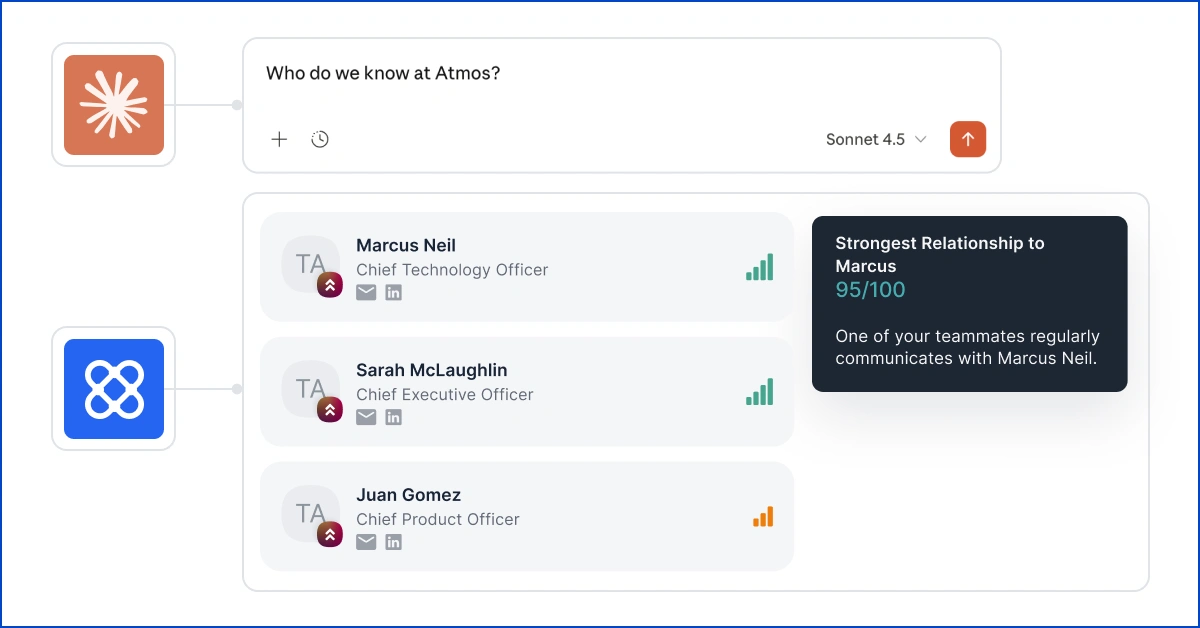
"We locally hosted a version of Claude and connected the MCP to all of our systems—Salesforce, Affinity, data sources—so people can just query for quick natural language questions. That's what's been used the most by investors."
How investors use it:
- "Who do we know at [Company]?" → Queries Affinity
- "Show me our AI investments from last three years" → Queries Salesforce & Affinity
- "What's the deal history with [Founder]?" → Synthesizes across all systems
Time: 30 seconds (vs. five to ten minutes searching manually).
The results
Alec: "Any tools we can give investors to serve themselves end up being highly adopted."
From zero AI adoption to standard practice in 18 months. Compliance maintained (data never leaves Bessemer infrastructure). 234 hours per year reclaimed per analyst (AI scrapes blogs, they build relationships). 20 different partner workflows supported simultaneously.
Bonus: AI evaluates AI tools
"The first step of evaluating any new AI tool: Feeding their security documents into Claude. That's helped accelerate our adoption." Result: Tool evaluation in days (not months).
Why it works
Locally hosted Claude meets R.I.A. compliance requirements without blocking adoption. MCP integration allows queries across the entire tech stack from a single interface. Self-service design means high adoption because people get answers immediately. Most importantly, the system flexes to support 70 different workflows rather than forcing everyone into one process.
Workflow 7: 5× research capacity overnight
Research bandwidth in investing is finite. An analyst can thoroughly research two to three companies per day. This constraint determines which markets you explore, which adjacent opportunities you investigate, which hypotheses you can test. AI removes that constraint.

The problem
David Hefter, BlackRock's AI Champion for Investments ($12T AUM), explains the research constraint: "Investing is a lot about doing research. If you're trying to manually gather 20 fields for 20 companies, it'd be quite time-consuming. With one AI prompt, you could replace what would have taken a hundred Google searches."
The bottleneck: Research bandwidth equals analyst hours available. Interesting adjacent markets go unexplored because there's no capacity.
What BlackRock built
They connected AI to comprehensive data infrastructure, including relationship intelligence from Affinity:
Example 1: The 20-company deep dive
Single prompt: "Research these 20 enterprise software companies. For each: revenue estimate, funding history, top three competitors, management team, customer segments, recent launches, growth trajectory."
AI autonomously searches public web → Queries Pitchbook → Searches internal BlackRock research → Checks Affinity for relationship history → Returns all 400 data points in five to ten minutes.
David: "The quality of results are very comparable to what a human analyst would do. That alone allows us to have scale."
Example 2: Understanding relationship dynamics
David: "When you connect AI to your own content—emails, calendar invites, the type of information Affinity links up to—you could better understand the relationship in its entirety. It's helpful when prepping for a meeting or trying to understand how a company operates."
Query: "Analyze our relationship with [Company]'s management team. Who are we closest to? Has the relationship strengthened or weakened?"
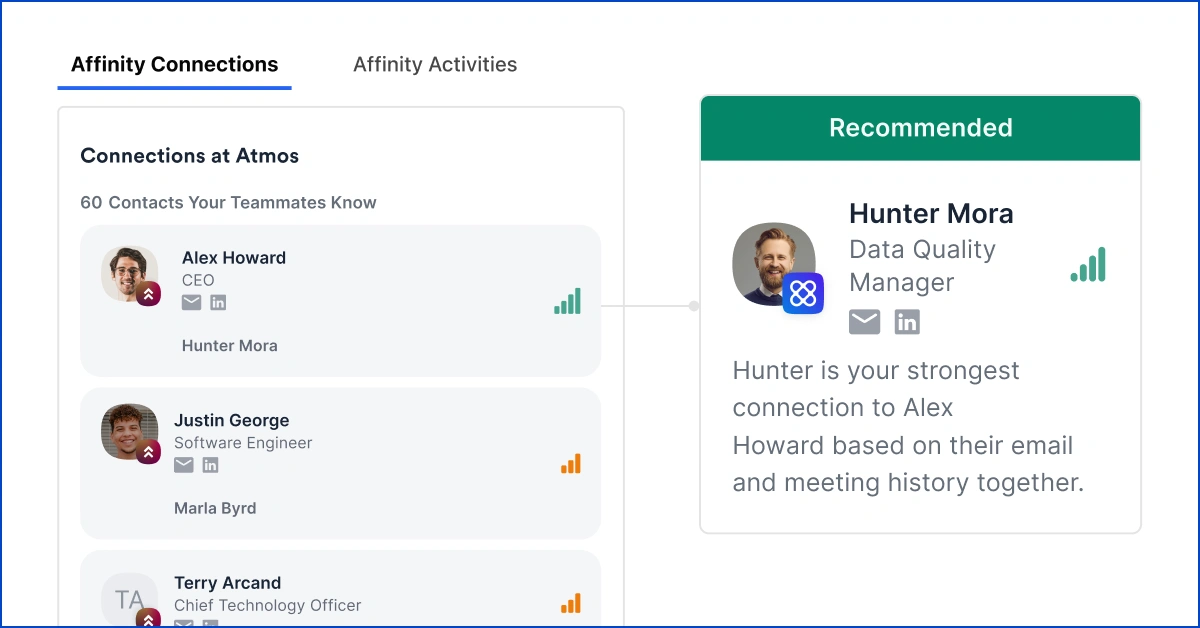
AI analyzes from Affinity: Email frequency, meeting patterns, response times, communication changes, relationship scores.
Output in two minutes: Complete relationship map. Know who to tap for reference calls. Understand relationship history. Have intelligent questions ready.
The results
David: "From an investor standpoint, the research element is significantly being augmented. We save time. We could research areas that we wouldn't otherwise research."
5× research throughput (10-15 companies per day vs. two to three). 15 minutes for meeting briefing (vs. one to two hours). Can explore adjacent markets (previously no bandwidth). Analyst-quality output at machine speed.
The accuracy framework
David: "A lot of people get held up thinking AI should be 100% accurate. If the old process was only getting it correct 80% of the time, then your AI threshold should be just beat that. With self-driving cars, they won't have zero accidents, but they'll have fewer than humans. Same idea."
The strategic advantage
David: "If you want to be differentiated, you don't necessarily need to build your own AI solution. The data can be applied through data connectors. With what Affinity is doing in that direction, it's very much aligned."
Why it works
AI handles the mechanical work of gathering and synthesizing information across multiple data sources. Humans apply judgment to the synthesized output. The combination produces analyst-quality research at 5× the speed, which fundamentally changes what the firm can investigate and how quickly they can move on opportunities.
What winners have in common
Pattern 1: Single source of truth for relationships
SpeedInvest's Lukas: "For anything when it comes to relationship intelligence, Affinity should be the source of truth—not just for deal management but for portfolio. If I want to find CTOs at our Series A companies in London, I go to Affinity."
Notable Capital's Dave: "It's incredible to see investment and platform teams living out of Affinity every day and come to trust it as their source of truth."
WiL's Clifford: "Everything is in one place which is in Affinity. This is important for our team—one source of truth and one place we can always go."
The firms that win consolidate relationship data in one system. No more spreading context across email, LinkedIn, spreadsheets, and individual memory. One system, complete visibility.
Pattern 2: Automatic capture drives adoption
Bessemer's Alec: "We use technology to amplify relationships and networks—to make connections easier to find that exist within your network."
SpeedInvest's Lucas: "All of that automated activity capture—emails, meetings, Zoom calls—can be captured via activity sync. This means manual data entry becomes a thing of the past."
Future of Work's Udai: "We use the Outlook integration, so it's always on in the background enriching our data set. Which means we're using it frequently."
Email and calendar sync forms the foundation. When interactions capture automatically, adoption becomes inevitable because the system delivers value without requiring data entry work.
Pattern 3: AI augments, never replaces
BlackRock's David: "In the investment and VC space, the relationships are key. You can't replace humans. The personal connection piece can't be replaced by AI."
Bessemer's Alec: "The reason Bessemer is such an established firm is not the process and technology—it's the relationships of the partners and the impressive founders we work with."
Notable's Bailey: "Relationships are access and access is everything in this industry."
AI handles research and administrative work. Humans handle relationship building and judgment. The combination is better than either alone.
Getting started
If your firm is struggling with:
- Banker relationships going cold → SpeedInvest's banker coverage system
- Missing proprietary deals → Gradient's 30-second relationship check
- Hours wasted on meeting prep → Notable's AI prep and follow-up
- CRM adoption failures → Future of Work's automatic capture approach
- Manual deal categorization → WiL's AI classification system
- Compliance blocking AI adoption → Bessemer's locally hosted model
- Research bandwidth constraints → BlackRock's AI research workflow
The infrastructure these firms share:
- Automatic activity capture from email and calendar (zero manual entry)
- Relationship intelligence calculated from actual communication patterns
- AI and automation layered on top of clean relationship data
- Single source of truth for all relationship context
What they've achieved:
SpeedInvest: 357 banker relationships managed systematically across 6 offices.
Notable Capital: 500+ BD intros per year tracked by a two-person team.
Bessemer: 70 investors enabled with flexible workflows, 234 hours per analyst reclaimed.
BlackRock: 5× research capacity, exploring markets that previously had "no bandwidth."
WiL: 250+ hours per year saved, AI categorizing hundreds of companies automatically.
Future of Work: CRM adoption that lasted beyond the typical 90-day failure point.
Gradient: Winning deals in a week while competitors still getting introduced.
What they have in common:
Relationship intelligence as a competitive advantage. Systems that scale without adding headcount. Infrastructure that makes networks systematically activatable.
What’s next?
Start with one: Pick the workflow solving your biggest pain point. Build from there.
Talk to customers: Connect with firms already using these workflows—Speed Invest, Notable Capital, Bessemer, BlackRock, WiL, FOW Partners.
See these workflows in action: Request a demo focused on your specific use case (banker relationships, LP management, portfolio support, AI integration).