10 AI tools transforming venture capital in 2026


The best deal you’ll lose this year won’t go to a smarter investor. It’ll go to a faster one. AI has collapsed the time between sourcing a startup and sitting across from its founder, and the firms that haven’t retooled are showing up to conversations that are already over.
Affinity’s survey of nearly 300 private capital dealmakers found that 85% now use AI to automate daily tasks, which is up from 76% just a year earlier. These are the ten AI tools reshaping how the most competitive venture capital firms operate in 2026.
Key takeaways
- AI now touches every phase of the VC workflow, from deal sourcing and due diligence to portfolio monitoring and LP reporting. Adoption is accelerating fast, with 82% of firms using AI for deal sourcing research.
- General-purpose AI assistants like Claude and ChatGPT have become core infrastructure for investment teams, handling everything from memo drafting to financial modeling to market research.
- Purpose-built VC platforms like Affinity, Harmonic, and Standard Metrics layer AI on top of industry-specific data, giving investors an edge that generic tools alone can’t deliver.
How artificial intelligence tools can improve operations in venture capital firms
IIncreasing operational efficiency
AI is giving investors back hundreds of hours a year by automating the manual work that used to consume half the week. Bessemer Venture Partners reclaimed 234 hours per analyst after integrating AI into their workflows, and BlackRock achieved a 5× increase in research throughput. They now analyze 10-15 companies daily versus the 2-3 that were possible with manual processes.
Speaking during a recent webinar on how AI will transform dealmaking, Andre Retterath, Partner at Earlybird Ventures described the experience of his firm:
“We’ve seen that we can leverage AI across the tech stack, so for every single task that we do, we can use AI to become more efficient, more effective, and also leverage data-driven approaches and AI to become more inclusive.”—Andre Retterath, Partner at Earlybird Ventures
Improving decision-making
AI surfaces investment insights from vast datasets, like founder track records, market signals, competitive landscapes, and hiring trends. It would take weeks to assemble this data manually. Instead of relying on gut instinct and a handful of reference calls, VCs can now process data at institutional scale and still move at startup speed. The all gives investors better raw materials to make judgement calls with.
Monitoring performance
AI-powered monitoring eliminates the quarterly data chase. Instead of emailing founders for updates and normalizing spreadsheets by hand, monitoring tools now auto-collect financial and operational data. They also alert investors to risks and opportunities as they emerge, rather than weeks after the fact.
Key use cases for AI in venture capital
AI adoption in VC breaks down into five core workflows. Each one reclaims time from manual work and redirects it toward the relationship-driven decisions that actually move deals forward.
Deal flow automation
The edge in deal sourcing comes from finding the right companies, and finding them first. AI-driven sourcing tools parse millions of data points to surface opportunities before mainstream databases catch up. Then, it ranks them against your investment thesis so your team focuses on deals that actually fit rather than sifting through noise.
Data entry automation
Every hour spent updating CRM records is an hour not spent building relationships. AI-powered CRMs now automatically capture interactions from email, calendar, and meetings, creating and enriching contact and company records. That means your relationship data is always current, and your team can redirect hundreds of hours annually from data entry to deal work.
Learn more about how this works in our guide to the best CRMs for automatic email and meeting capture.
Startup evaluation and due diligence
AI compresses weeks of due diligence into hours by analyzing financial data, market positioning, competitive dynamics, and founder backgrounds simultaneously. As Adam Perelman, Engineering Manager of ChatGPT at OpenAI explains, AI is particularly powerful at processing “unstructured data” to extract “different signals.”
"You want to evaluate tons of different founder profiles, you want to evaluate a market, or you want to understand user feedback, things like that. AI can play a really powerful role here.”—Adam Perelman, Engineering Manager of ChatGPT at OpenAI.
Portfolio management and monitoring
Skip the spreadsheets. AI now aggregates portfolio data from multiple sources, flags anomalies automatically, and generates the benchmarked reports that power partner meetings, LP updates, valuations, and audits. It does this without the manual work that used to consume entire analyst weeks.
Deal negotiation and term sheet generation
Walk into every term sheet negotiation armed with market context. Language models now draft term sheets, analyze comparable deal structures, and flag non-standard provisions in seconds, giving investors a data-driven starting point instead of negotiating from a blank page.
10 VC tools powered by AI that investors are actually using
Andre Retterath at Earlybird Ventures recommends an “80/20 approach” to AI adoption: pursue off-the-shelf tools that solve 80% of your needs rather than building custom solutions, keep your tech stack simple, and prioritize tools that serve as unified sources of information.
"I would go for an 80/20 approach because there's a lot available off the shelf today. There’s less need to build stuff yourself versus five years back. And there are tools like Affinity that are very close to offering a single source of truth that unifies different information.”—Andre Retterath, Earlybird Ventures
The ten VC tools below reflect this philosophy. Each one solves a specific, high-value problem for investment teams today. While this list focuses on venture capital, many of these tools are equally relevant for private equity firms looking to bring AI into their deal sourcing, due diligence, and portfolio management workflows.
1. Claude
Claude has become the AI assistant of choice for investors who need depth over speed. In due diligence, depth wins. Built by Anthropic, Claude’s long context windows let it process entire pitch decks, partnership agreements, and financial models in a single prompt, so you can upload your full diligence package and get comprehensive analysis without summarizing or chunking documents first.
How VCs use it: Investment teams use Claude to draft structured memos (complete with team, product, traction, and risk sections), model financial scenarios, analyze portfolio company performance, and conduct deep market research. Notable Capital uses Claude with MCP integrations to manage 500+ BD intros annually with just a two-person team. World Innovation Lab runs Claude locally to power 70+ different investor workflows while maintaining compliance.
2. Granola
Granola is the AI notepad that’s taken the VC world by storm, largely through word of mouth among investors. Unlike traditional meeting transcription tools that drop a bot into your call (which can feel awkward in sensitive deal conversations), Granola runs privately on your device and enhances the notes you’re already taking with AI-powered context from the conversation.
How VCs use it: Investors use Granola to capture meeting notes that automatically include key details they might have missed, generate follow-up action items, and build a searchable archive of every founder conversation. The privacy-first approach—no bot joining calls, no audio uploaded to the cloud—makes it particularly suited to the confidential nature of deal discussions. Granola raised $43M at a $250M valuation in 2025, with VCs themselves as its most vocal champions.
3. Affinity
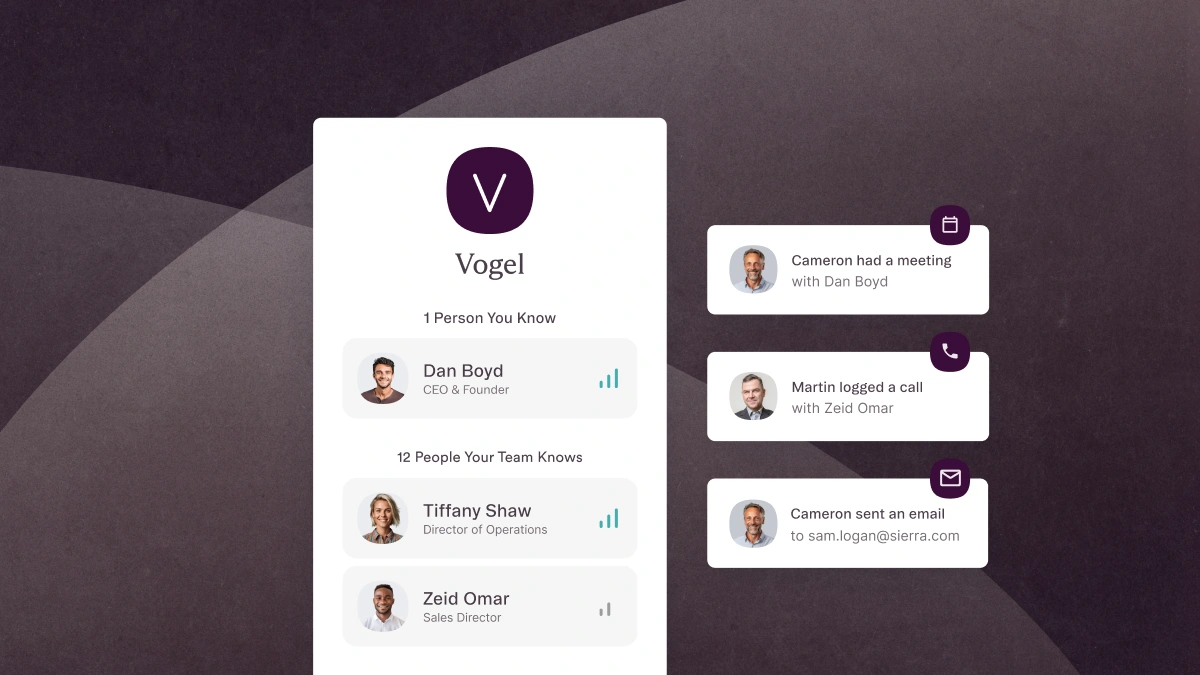
Affinity is the CRM purpose-built for the private capital industry, and its AI capabilities have expanded significantly. The platform automatically captures relationship data from your team’s emails, calendars, and meetings, then layers AI on top to surface deal insights, prep you for meetings, and identify the warmest path to any founder or LP.
How VCs use it: Affinity’s AI suite now includes Chat (ask “prep me for Acme” or “who has the strongest path in” and get answers in seconds instead of hours), natural language pipeline queries (“show me all Series B deals closing this quarter”), File Analyzer (drop in a deck, memo, or tearsheet and get key details extracted and contextualized against your pipeline), and Tear Sheets (compile deal context, relationships, and activity into a shareable PDF in seconds). On the platform side,
Affinity offers MCP integrations that serve as the data layer for Claude, ChatGPT, Gemini, and Copilot out of the box, Snowflake and modern APIs for self-serve data access without engineering resources, Team Privacy to isolate teams across lists, notes, and deals, and Network Security with IP-based access controls and enterprise-grade posture built in. SpeedInvest uses Affinity to manage 357 LP relationships across six offices, and World Innovation Lab achieved 95%+ accuracy in AI-powered deal categorization through Affinity’s workflows.
4. ChatGPT
ChatGPT remains one of the most widely used AI tools across venture capital because it hits the sweet spot between capability and ease of adoption. For firms building AI into their workflows for the first time, its broad capabilities and large plugin ecosystem make it the lowest-friction starting point available.
How VCs use it: Investment teams use ChatGPT for drafting investor outreach and cold emails, reviewing and summarizing pitch decks, analyzing market trends and forecasting sector dynamics, and generating reports and term sheet drafts. Its versatility across the deal lifecycle—from first outreach to final memo—is what keeps it in daily rotation even as more specialized tools emerge.
5. Perplexity
Perplexity is a research-first AI assistant that distinguishes itself through citation-backed answers. Every claim comes with a source, so you can verify what you’re reading. For investors conducting due diligence, that traceability is invaluable.
How VCs use it: VCs use Perplexity for rapid market landscape research, competitive analysis, and fact-checking claims from pitch decks. When a founder says they’re “the only platform doing X,” Perplexity can validate or challenge that assertion in seconds, with receipts. Many firms pair Perplexity with Claude: Perplexity for broad research and fact-finding, Claude for deep analysis and document processing.
6. Harmonic
Harmonic specializes in finding companies before anyone else does. The platform indexes over 30 million companies and tracks founder movements, hiring signals, and early traction indicators to surface pre-seed and stealth-stage startups before formal fundraising processes even begin.
How VCs use it: Hundreds of VC teams use Harmonic to get ahead of competitive deal processes by identifying promising founders and companies at the earliest possible stage. The platform’s ability to detect signals like key hires, domain registrations, and founder departures from established companies gives investors a sourcing edge that traditional databases can’t match. Harmonic reached a $1.45B valuation in 2025, reflecting just how central early-stage sourcing intelligence has become.
7. Gamma
Gamma has emerged as the AI-powered alternative to traditional presentation software, and its adoption among VC teams has been striking. Gamma boasts 70 million users and $100M in ARR as of late 2025.
How VCs use it: Investment teams use Gamma to quickly build polished presentations for LP updates, partner meetings, and internal deal reviews. Rather than spending hours formatting slides, investors describe what they need and Gamma generates a structured, visually clean deck that can be refined from there. It’s particularly useful for the recurring presentation work that eats into analyst and associate time, like quarterly reviews, portfolio summaries, and sector overviews.
8. Tracxn
Tracxn is an AI-powered research platform tracking over three million companies across sectors and geographies, providing the comprehensive data coverage that sector-focused investors need for mapping and discovery.
How VCs use it: VCs rely on Tracxn for sector landscaping, identifying companies across specific verticals, and tracking funding rounds and competitor movements globally. This breadth means you won’t miss emerging competitors in fragmented sectors or overlook promising founders in underindexed geographies. This is important when your thesis depends on finding gaps before the rest of the market catches on.
9. Grata
Grata takes a different approach to deal sourcing by applying machine learning and natural language processing to a dataset of 1.2 billion web pages and three years of historical data, enabling investors to discover private companies based on what they actually do rather than how they’re categorized.
How VCs use it: Grata’s natural language search surfaces companies that keyword-matched databases miss. This is especially helpful in earlier-stage sourcing where your edge depends on finding founders before they hit mainstream deal lists. Investors describe a business model or market niche in plain language, and Grata returns relevant private companies that conventional platforms haven’t indexed yet. The platform then connects you directly with company executives, so you can turn that discovery into a first-meeting advantage.
10. Standard Metrics
Standard Metrics automates the portfolio data collection and reporting process that has traditionally been one of the most time-consuming parts of VC operations.
How VCs use it: The platform automatically collects financial and operational data from portfolio companies, benchmarks performance against relevant comparables, and generates the reports that power partner meetings, LP updates, valuations, and audits. For firms managing large portfolios, Standard Metrics eliminates the manual spreadsheet work that used to consume entire analyst weeks while increasing the accuracy and consistency of portfolio data.
Find, manage, and close more deals with Affinity
The most effective VC teams build workflows around a central relationship intelligence platform that connects everything. Without that integration layer, you end up with tooling debt instead of efficiency gains. Affinity serves as that connective layer, eliminating the manual work of tracking who knows whom, surfacing the warmest paths to founders and LPs, and centralizing deal management so nothing falls through the cracks. Combined with AI capabilities like Chat, File Analyzer, and natural language pipeline queries, it gives investment teams the infrastructure to move faster on better deals.
Request a demo to see how Affinity can power your firm’s deal flow.
VC AI tool FAQs
How can you use AI for VC?
AI accelerates every phase of the venture capital workflow. General-purpose assistants like Claude and ChatGPT handle memo drafting, market research, and financial modeling. Specialized tools like Harmonic and Grata automate deal sourcing by surfacing companies before they hit mainstream databases. CRM platforms like Affinity use AI to capture relationship data automatically and surface deal insights. And portfolio monitoring tools like Standard Metrics eliminate the manual work of collecting and benchmarking company data, freeing investors to focus on the decisions that actually require human judgment.
How will AI affect venture capital?
AI is already reshaping VC by helping smaller teams to operate with the reach and rigor of much larger firms. A two-person BD team at Notable Capital manages 500+ intros annually with AI-powered workflows. BlackRock’s research team increased throughput 5× through AI integration. The firms that adopt AI effectively are giving their investors better information, faster, so they can spend more time on the relationship-driven work that actually wins deals.
Can these AI tools be used for private equity too?
Many of them, yes. AI for private equity follows similar patterns. Deal sourcing, due diligence, portfolio monitoring, and LP reporting all benefit from the same AI capabilities. Tools like Claude, ChatGPT, and Perplexity are industry-agnostic and work just as well for PE workflows. Affinity is purpose-built for the broader private capital industry, serving both VC and PE firms with relationship intelligence, deal flow management, and AI-powered research. Specialized sourcing tools like Grata are particularly relevant for PE firms focused on middle-market deals where private company discovery is critical.
How can AI automate deal sourcing for VC and PE firms?
AI automates deal sourcing by scanning thousands of data points—from funding announcements to patent filings—to surface companies that match a firm's investment thesis. Tools like Affinity go further by analyzing relationship data across your network to identify warm introductions and proprietary deal flow that competitors miss.
What AI tools integrate with venture capital CRM systems?
Several AI tools are designed to work alongside VC CRM platforms. Affinity natively combines CRM and AI capabilities, offering automated data capture, relationship intelligence, and AI-powered meeting notes. Other tools like Granola (meeting transcription) and ChatGPT (research and memo drafting) can complement your CRM workflow through integrations.
How are VC firms using AI for pitch deck analysis?
VC firms use AI to extract key metrics from pitch decks, compare them against portfolio benchmarks, and flag potential concerns automatically. AI tools can analyze financial projections, market sizing, and competitive positioning within minutes. This gives analysts more time to focus on the qualitative aspects of founder evaluation and market dynamics.